

In a world where tangled cords and low battery warnings haunt the daily grind, wireless chargers have swooped in like a superhero with a cape. Imagine a life where charging your devices is as easy as placing them down—no more wrestling with cables or playing the guessing game of which plug fits. It’s like magic, but without the rabbit in the hat.
Overview of Wireless Chargers
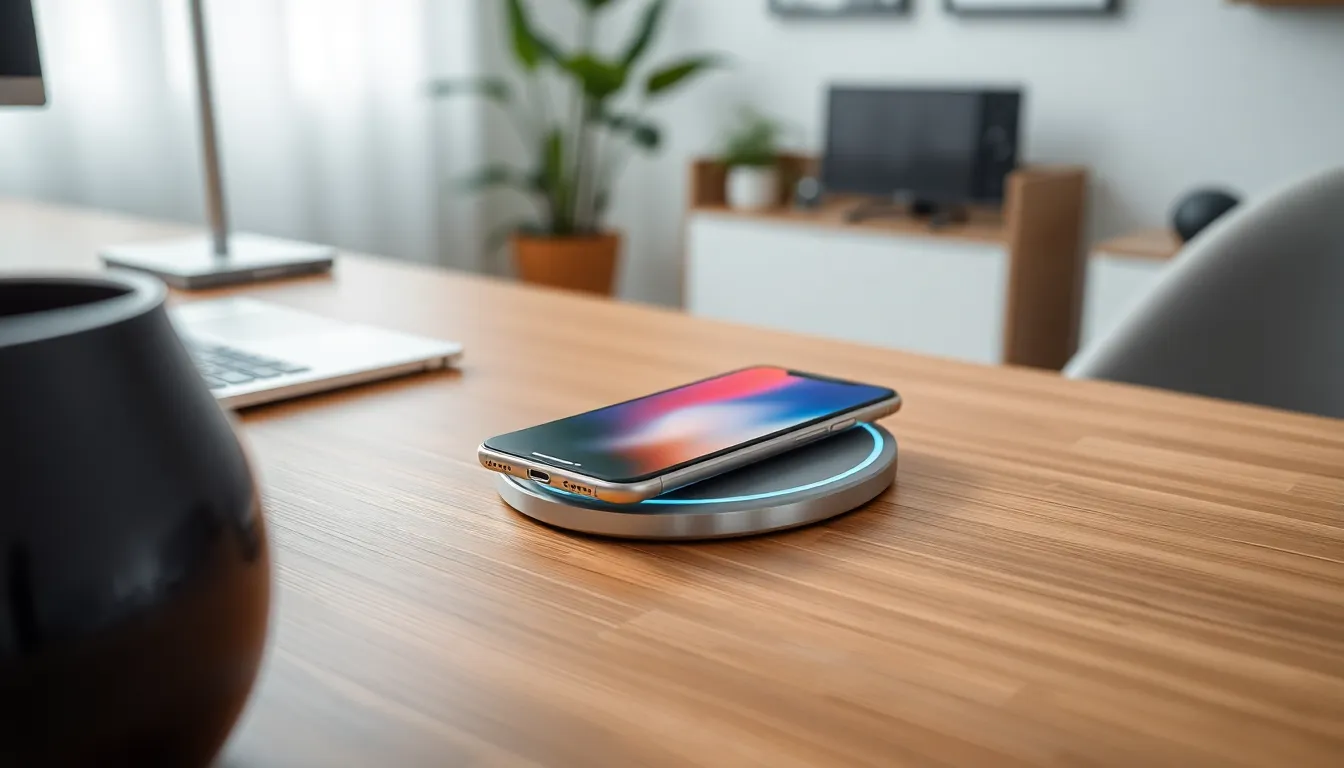
Wireless chargers provide a simple solution for powering devices. Design often features a flat surface where users place their devices. This method utilizes electromagnetic induction, allowing devices to charge without needing cables. Efficiency remains a key factor in their appeal, with many models offering fast charging capabilities.
Several standards exist for wireless charging, including Qi and PMA. Qi, developed by the Wireless Power Consortium, has gained widespread acceptance. It supports various devices, from smartphones to smartwatches, increasing compatibility options. Meanwhile, PMA focuses on commercial applications, enhancing charging stations in public spaces.
Many users appreciate the convenience wireless chargers offer. They reduce wear and tear on charging ports, extending the life of devices. Additionally, the absence of cables eliminates clutter, promoting a cleaner workspace.
Wireless charging technology continues to evolve. Products now include features like multiple device charging and integration with smart home systems. Some models also incorporate cooling mechanisms to prevent overheating during use.
When selecting a wireless charger, several factors warrant consideration. Compatibility with devices, charging speed, and safety features play critical roles. Furthermore, users may consider the design and material quality when making a purchase.
Overall, wireless chargers significantly streamline the device charging process. They eliminate complications associated with traditional charging methods while promoting greater convenience and efficiency.
Types of Wireless Chargers
Several types of wireless chargers exist, each featuring unique technology and application. Understanding these types helps users choose the right charger for their devices.
Inductive Charging
Inductive charging stands out as the most common method for wirelessly charging devices. It employs electromagnetic induction to transfer energy between the charger and the device. Two coils—one in the charger and another in the device—create a magnetic field, allowing for efficient energy transfer. This method supports fast charging options, enabling quick power-ups for compatible gadgets. Many smartphones and accessories utilize this technology, making it widely accessible.
Resonant Charging
Resonant charging distinguishes itself with its ability to charge multiple devices at varying distances. This technology employs resonant inductive coupling, which enhances energy transfer efficiency across longer gaps. Users benefit from the convenience of simply placing devices nearby rather than needing precise alignment. Often found in wireless charging pads, resonant charging is suitable for environments with multiple devices, such as homes or offices. Various smart gadgets increasingly adopt this technology due to its flexibility and user-friendliness.
Radio Frequency Charging
Radio frequency charging relies on electromagnetic fields to deliver power to devices. This type uses radio waves to transmit energy, enabling charging over more extended distances than inductive or resonant methods. Users can charge devices without needing direct contact, offering greater freedom of movement. This technology often caters to smaller devices, like sensors and wearables, making it ideal for applications in IoT environments. As the demand for cable-free solutions grows, radio frequency charging continues to evolve, lighting the way for more versatile options in wireless charging.
Benefits of Using Wireless Chargers
Wireless chargers offer multiple advantages that enhance the user experience. They simplify the process of keeping devices powered up while reducing clutter.
Convenience and Accessibility
Convenience ranks high among the benefits of wireless chargers. Users can easily place their devices on a charging pad without fumbling with cords. Charging takes place seamlessly with minimal effort. Many wireless chargers support multiple orientations, allowing for landscape or portrait charging. Additionally, this convenience often results in faster charging since many models provide quick charging capabilities. Accessibility becomes apparent in both home and office environments, making it easy for anyone to power their devices when needed.
Reduced Wear and Tear
Reduced wear and tear on charging ports is another significant advantage. Frequent plugging and unplugging can degrade ports over time. Wireless chargers eliminate this issue as devices simply sit on the charging pad without physical connections. This results in longer-lasting device integrity. Ports remain intact, which may prevent costly repairs or replacements. Users can enjoy increased reliability when using wireless chargers, allowing them to focus on more important tasks.
Compatibility with Multiple Devices
Compatibility with multiple devices enhances the utility of wireless chargers. Many models support a range of devices, including smartphones, tablets, and wearables. Qi wireless chargers are particularly versatile, working with numerous brands and gadgets. This versatility reduces the need for multiple chargers cluttering workspaces. Users appreciate the ability to charge different devices on a single platform, making it easier to keep everything powered. The expansion of wireless charging technology continues to improve compatibility with newer gadgets.
Key Features to Consider
Selecting the right wireless charger involves evaluating several key features that enhance functionality and user experience.
Charging Speed
Charging speed plays a significant role in user satisfaction. Many wireless chargers offer varying power outputs, typically ranging from 5W to 15W. Chargers with higher wattage deliver faster charging capabilities, reducing wait times for users. It’s important for users to check their device specifications to ensure compatibility with faster charging modes. Fast charging is especially beneficial for smartphones, which often require speedy power replenishment.
Design and Build Quality
Design and build quality influence usability and aesthetics. Sleek, minimalist designs complement modern devices, making them suitable for various settings. Premium materials, such as aluminum and tempered glass, enhance durability and provide an appealing look. Furthermore, the surface texture should offer grip, preventing devices from sliding off during charging. Some models incorporate LED indicators, providing at-a-glance status updates on charging progress.
Safety Features
Safety features are paramount when considering wireless chargers. Effective models include over-voltage protection, temperature control, and foreign object detection, reducing risks associated with overheating or short-circuits. Chargers with integrated safety mechanisms ensure device integrity and user peace of mind. Additionally, certifications from organizations like Qi or UL signal adherence to quality and safety standards, reinforcing their reliability for everyday use.
Conclusion
Wireless chargers are revolutionizing the way people power their devices. By eliminating cords and simplifying the charging process, they offer unmatched convenience and efficiency. As technology progresses, the variety of wireless charging options continues to expand, catering to a diverse range of devices and user needs.
With features like fast charging capabilities and compatibility with multiple devices, wireless chargers are becoming essential tools in modern life. Their sleek designs not only enhance functionality but also add aesthetic appeal to any workspace. As users embrace this innovative technology, the future of charging looks brighter and more efficient than ever.